📅 Last updated: 11.11.2026
Walk through the coral-rag alleys of Zanzibar Stone Town and the island’s history rises up around you in plaster, mangrove timber and brass-studded doors. This UNESCO World Heritage Site on Unguja’s western shore is one of the Indian Ocean’s great surviving port cities, a place where Swahili, Arab, Indian, Persian and European influences were layered over centuries of monsoon trade, Omani rule and British colonial administration. It remains a living town of roughly 16,000 residents, not a museum piece, and that is precisely what makes it extraordinary.
Zanzibar Stone Town is the historic core of Zanzibar City, a dense maze of coral-stone buildings on Unguja island off the Tanzanian coast. Built largely between the 18th and early 20th centuries, it layers Swahili urban traditions with Omani Arab, Indian, Persian and European elements, and was inscribed as a UNESCO World Heritage Site in 2000. Its landmarks include the House of Wonders, the Old Fort, the Anglican Cathedral built over the former slave market, and the intricately carved doors that define its streets.
- Why Is Zanzibar Stone Town Considered a Crossroads of Civilisations?
- What Does the Architecture of Zanzibar Stone Town Reveal?
- How Did Trade, Slavery and Empire Shape Zanzibar Stone Town?
- Zanzibar Stone Town's Cultural Layers: Swahili, Arab and Indian
- Key Dates in the Making of Zanzibar Stone Town
- What Should You See and Do in Zanzibar Stone Town Today?
- What Challenges Does Zanzibar Stone Town Face in the 21st Century?
- Why Zanzibar Stone Town Still Matters
Why Is Zanzibar Stone Town Considered a Crossroads of Civilisations?
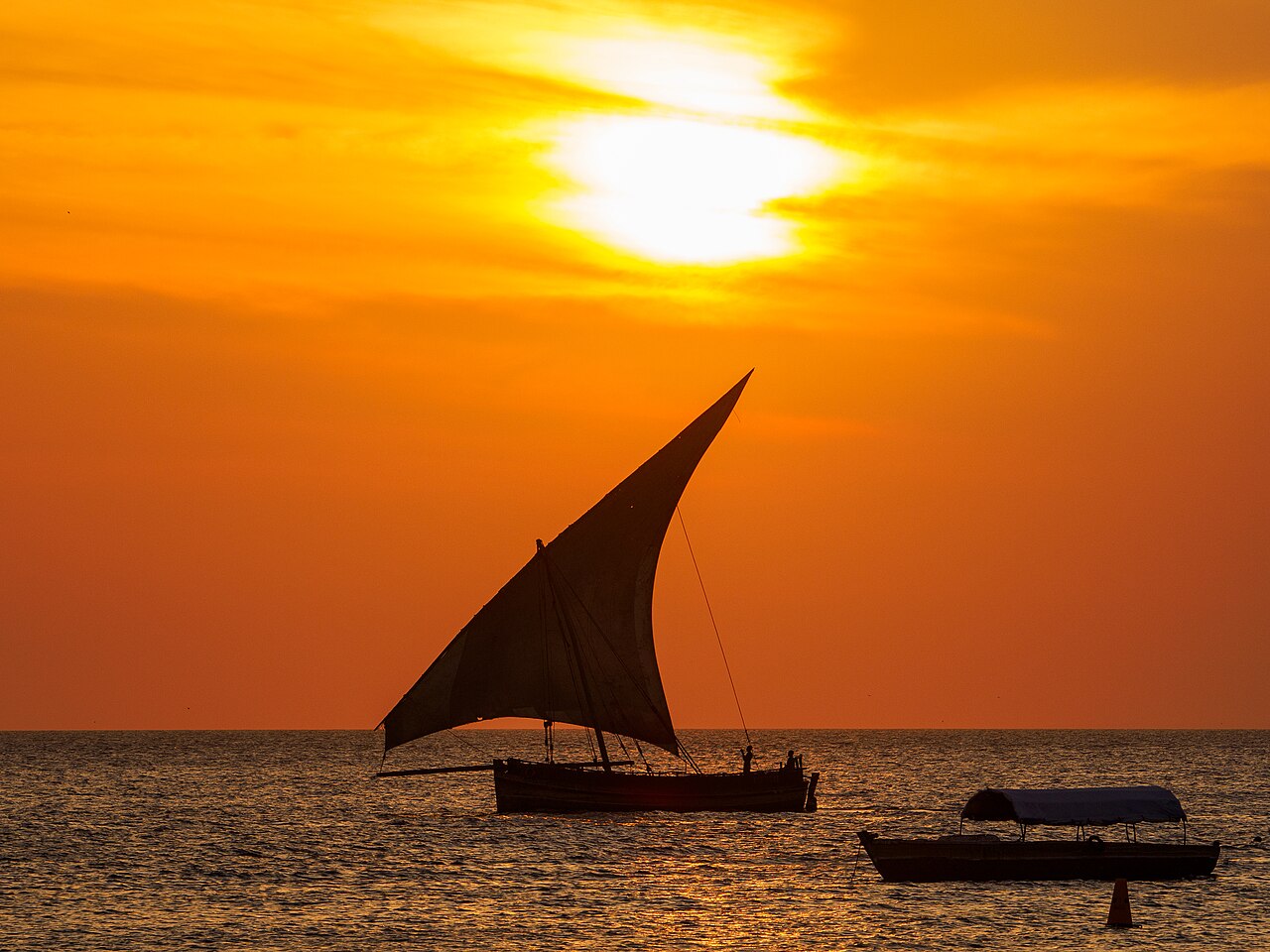
The answer lies in the monsoon. For more than a thousand years, dhows rode the kaskazi (northeast) winds down from Arabia and the Persian Gulf and returned on the kusi (southwest) winds, and Zanzibar sat squarely on that circuit. Swahili-speaking communities had already built trading networks along the East African coast by the first millennium CE — the Periplus of the Erythraean Sea, a Greek navigational text from around the 1st century CE, describes the East African coast as a source of ivory, tortoiseshell and rhino horn. By the medieval period, the Swahili city-states of Kilwa, Mombasa and Malindi were minting their own coins and trading with China and India.
Stone Town itself, as a dense urban settlement of coral-stone houses, crystallised later — most visibly from the late 18th century, when the Omani Al Busaidi dynasty moved its capital from Muscat to Zanzibar. Under Sultan Seyyid Said bin Sultan, who relocated his court here in 1840, the town became the capital of an Omani empire with clove plantations at its economic heart. Indian merchants — many from Kutch and Gujarat, both Hindu and Ismaili and Ithna’ashari Shia Muslim — financed the trade, served as customs collectors and built their own distinctive architecture. British consuls, German traders, American clove buyers and French missionaries all passed through. Each left something in the mortar.
The result is a town where a single lane can pass an Omani fort, a Gujarati dispensary, a Swahili baraza bench, a Gothic Anglican spire and a Hindu temple. That density of difference, held together by a common building material — the porous coral rag cut from the island’s reef — is what gives Zanzibar Stone Town its particular texture.
What Does the Architecture of Zanzibar Stone Town Reveal?
Coral rag is soft when quarried and hardens on exposure to air, which made it cheap and abundant; lime mortar was made by burning coral. The buildings are organic, patched and re-plastered, and the town’s fabric has always been maintained by hand. Two architectural signatures stand out.
The carved doors
Stone Town’s doors are its most photographed feature, and rightly so. The oldest carry Gujarati-influenced square frames with lotus motifs; the later Omani style features a rounded arch, a central carved post and rows of brass studs originally borrowed from Indian sea-trade chests. The largest doors, some over three metres tall, signalled the wealth of the household, and the brass spikes echoed the studs on Indian merchant chests that protected cargo. Look for the doors on Kenyatta Road and along the seafront — the carved Quranic inscriptions and date palms are a living archive of who built what, and when.
The House of Wonders and the Old Fort
The Beit-al-Ajaib, or House of Wonders, was built in 1883 by Sultan Barghash bin Said as a ceremonial palace; it was the first building in Zanzibar — and by some accounts in East Africa — to have electric light and a lift, hence the name. It later housed the Zanzibar Museum and, after a 2020 collapse of part of its structure, has been under restoration. Beside it stands the Old Fort (Ngome Kongwe), built by Omani forces around 1699–1701 on the site of a Portuguese chapel, with its crenellated walls and a courtyard now used for festivals and craft stalls.
Nearby, the Anglican Christ Church Cathedral, consecrated in 1879, was deliberately built on the site of the former slave market, with a red cross marking the spot of the whipping post. David Livingstone’s medical assistant, the missionary bishop Edward Steere, oversaw the design; the cathedral’s altar stands where the market’s main tree once did. It is one of the most morally charged pieces of architecture in Africa.
How Did Trade, Slavery and Empire Shape Zanzibar Stone Town?
Zanzibar’s wealth in the 19th century rested on two commodities: cloves and human beings. Clove seedlings were introduced from the Moluccas (via French plantations in the Indian Ocean) in the early 1800s, and by mid-century Zanzibar and Pemba supplied most of the world’s cloves. The plantation economy depended on enslaved labour, and Stone Town was the hub of an East African slave trade that funnelled captives from the interior — what is now Tanzania, Malawi, Zambia and the eastern Democratic Republic of Congo — through the market and on to Arabia, Persia and the Gulf.
The scale was enormous. Estimates vary, but historians such as Abdul Sheriff, whose work on Zanzibar’s slave trade is foundational, put the number of people passing through the Zanzibar market in the 19th century in the hundreds of thousands. The British signed treaties with the Omani sultans to restrict the trade — the Hamerton Treaty of 1845 limited it to within a coastal strip, and a full ban on the sea trade followed in 1873 under Sultan Barghash, though slavery itself was not abolished in Zanzibar until 1897.
The legacy is not abstract. The slave market memorial and the cathedral’s moving underground chamber, where captives were once held, are among the most visited sites in Zanzibar Stone Town, and the town’s African and diaspora communities continue to reckon with that history. In 2023, Zanzibar’s government and UNESCO partners continued restoration work on the former slave market site, and the story is told with increasing directness rather than euphemism.
Zanzibar Stone Town’s Cultural Layers: Swahili, Arab and Indian
Stone Town’s culture is not a blend in which ingredients dissolve; it is a place where distinct communities lived side by side and shaped one another. Understanding the layers helps a visitor read the streets.
Swahili foundations
Swahili language, cuisine and social organisation are the bedrock. The word Swahili derives from the Arabic sawahil, “coasts,” but the culture is African in its roots and Indian Ocean in its reach. Stone Town’s baraza benches outside doorways are the traditional setting for neighbourly conversation; the town’s food — pilau, biriani, urojo (a tangy tamarind soup), grilled octopus, coconut-rich curries — is Swahili cooking inflected by Omani, Indian and Portuguese ingredients. Kiswahili is the lingua franca, and the town’s poets and taarab musicians, including the celebrated Siti binti Saad (c. 1880–1950), who recorded for Columbia in the 1920s and 1930s, gave the world some of East Africa’s earliest commercial music.
Arab and Omani influence
The Omani period (roughly 1698 to 1890, with the sultanate persisting under British protection until 1963) left the town’s palaces, its fort, its mosques and its ruling class. The Malindi and Shangani waterfronts, the Sultan’s palace (Beit el-Sahel, now a museum), and the Old Dispensary with its ornate balconies all date from this era. The Ibadhi branch of Islam practised by the Omani ruling house coexisted with the Shafi’i Sunni practice of the Swahili population and the Shia and Ismaili traditions of the Indian communities.
Indian communities
Indian merchants were present from at least the 16th century and became indispensable to the 19th-century economy. The Old Dispensary (now the Stone Town Cultural Centre), built in 1887 by the merchant Tharia Topan, is a showcase of Indian-Omani fusion: carved wooden balconies, stained glass and Gujarati detailing. The town’s Hindu temple on New Mkunazini Road and its Ismaili and Ithna’ashari mosques remain active. Tharia Topan himself was a key financier of Sultan Barghash and helped fund the cathedral’s construction — a reminder that the town’s religious communities were entangled in each other’s projects, for better and worse.
Key Dates in the Making of Zanzibar Stone Town
| Period / Date | Event | Legacy in Stone Town |
|---|---|---|
| c. 1st century CE | Periplus of the Erythraean Sea documents East African coastal trade | Swahili trading networks that predate Stone Town |
| 1698–1701 | Omani forces take Zanzibar; Old Fort built | Ngome Kongwe, the town’s oldest surviving structure |
| 1840 | Sultan Seyyid Said moves his capital from Muscat to Zanzibar | Palaces, clove economy, Indian merchant influx |
| 1873 | Treaty banning the sea slave trade signed under British pressure | Slave market memorial and cathedral site |
| 1883 | House of Wonders (Beit-al-Ajaib) completed | First building in East Africa with electric light and a lift |
| 2000 | UNESCO inscribes Stone Town as a World Heritage Site | International recognition and conservation framework |
What Should You See and Do in Zanzibar Stone Town Today?
Stone Town rewards slow walking. The town is compact — you can cross it in twenty minutes — but the lanes are designed to confuse, and that is part of the pleasure. A few anchors are unmissable.
- Forodhani Gardens at dusk: the seafront food market where vendors grill skewers of fish, octopus and Zanzibar pizza; the best introduction to the town’s evening rhythm.
- The slave market and cathedral: the memorial, the underground holding chamber and the altar built over the whipping post; allow time to sit with it.
- The Old Fort and House of Wonders: the fort’s courtyard hosts the Sauti za Busara music festival each February, one of Africa’s finest celebrations of Swahili and Indian Ocean music.
- Darajani Market: the town’s working market for spices, fish, produce and household goods — a reminder that Stone Town is a functioning city, not a stage set.
- A spice and heritage walk: guided walks led by local historians cover the town’s mosques, temples, doors and the former homes of figures like the trader Tippu Tip and the Scottish explorer David Livingstone, who stayed here before his final journey.
For contemporary culture, the Zanzibar International Film Festival (ZIFF), founded in 1997, brings filmmakers from across the continent and the Indian Ocean to venues around the town each July. The Dhow Countries Music Academy, founded in 2002, teaches taarab, kidumbak and ngoma traditions to a new generation. Both are evidence that Zanzibar Stone Town’s cultural life is ongoing, not archived.
What Challenges Does Zanzibar Stone Town Face in the 21st Century?
Living heritage is fragile. The coral rag that makes the town beautiful is also vulnerable to salt, rain and rising humidity, and many of the 19th-century buildings are privately owned by families who cannot afford restoration. UNESCO’s 2000 inscription came with a management plan, but enforcement has been uneven, and the pressures of tourism — rising rents, conversion of homes into guesthouses, the slow displacement of long-term residents — are real.
The 2020 partial collapse of the House of Wonders exposed the scale of the conservation backlog. Restoration work has been supported by the Zanzibar government and international partners, and there is growing recognition that the town’s future depends on keeping it inhabited. A Stone Town without its residents would be a shell; the baraza benches, the call to prayer, the schoolchildren cutting through the alleys and the smell of frying cassava at Darajani are the town’s living tissue.
There is also a reckoning with history. The slave trade’s legacy is now interpreted more honestly than in earlier decades, and Zanzibar’s own 1964 revolution — which overthrew the sultanate and led to the union with Tanganyika that formed Tanzania — remains a subject of careful public memory. Visitors who engage with these histories, rather than treating the town as a backdrop for photographs, get closer to what it actually is.
Why Zanzibar Stone Town Still Matters
Zanzibar Stone Town is one of the few places on Earth where you can read a thousand years of Indian Ocean history in a single afternoon’s walk — from the Swahili foundations beneath everything, through the Omani palaces and the Indian merchant houses, to the cathedral that turned a site of suffering into a place of conscience. It is a town of carved doors and brass studs, of taarab drifting from a courtyard, of cloves drying in the sun and fishing dhows returning to the harbour at dusk.
It matters because it shows what African urbanism has always been: connected, cosmopolitan, plural. The people of Zanzibar Stone Town did not wait for the wider world to arrive; they built a city that the world came to. And they are still building it — restoring, arguing, making music, cooking, praying and trading in the same lanes their ancestors walked. Go with curiosity and respect, and the town will give you its history in return.