📅 Last updated: 01.11.2026
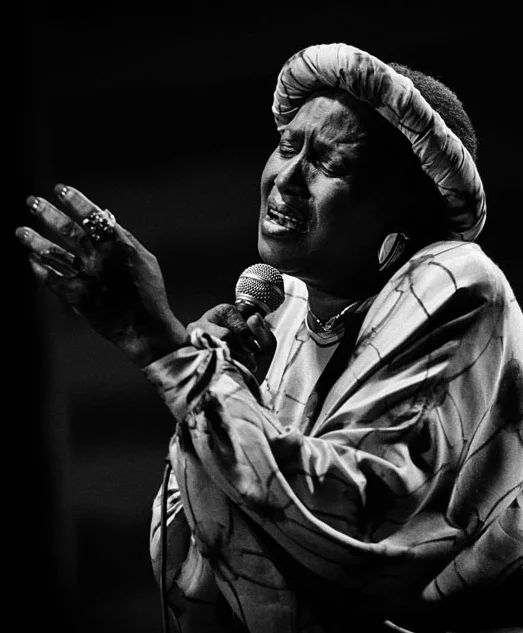
Miriam Makeba was the first African artist to win a Grammy Award, and she used that global platform to expose the brutality of apartheid to audiences who had never heard of Sharpeville. Born in Prospect Township, Johannesburg, in 1932, she carried the songs of Xhosa, Zulu, and Sotho traditions onto the world’s biggest stages — and paid for it with nearly three decades of exile. Her voice did what sanctions debates and diplomatic cables struggled to do: it made apartheid personal, vivid, and impossible to ignore.
Miriam Makeba (1932–2008) was a South African singer and civil rights activist whose music introduced African languages and traditions to global audiences. Testifying before the United Nations in 1963, she denounced apartheid as a system of “man’s inhumanity to man,” and her records and concerts became a cultural weapon against the regime. Exiled for 31 years, she returned home in 1990 and continued performing until her death on stage in Italy in 2008.
- Who Was Miriam Makeba, and Why Does Her Voice Still Matter?
- How Did Miriam Makeba's Music Become a Weapon Against Apartheid?
- Miriam Makeba's Exile: What Did Thirty-One Years Away Cost Her?
- What Did Makeba's UN Testimony and Activism Actually Achieve?
- How Did Miriam Makeba's Return to South Africa Change Her Legacy?
- What Can Miriam Makeba's Career Teach Us About Art and Politics?
- Why Miriam Makeba Remains a Defining Voice of the Twentieth Century
Who Was Miriam Makeba, and Why Does Her Voice Still Matter?
Makeba’s story begins in a segregated Johannesburg that most of her future audiences could not have pictured. She was born Zenzile Miriam Makeba on 4 March 1932 in Prospect Township, a settlement near the city centre that was later demolished under apartheid’s slum clearance. Her mother, Christina, was a domestic worker and traditional healer who had once been jailed for brewing umqombothi, a traditional sorghum beer; her father, Caswell, died when she was young. Makeba spent her first six months in a prison compound after her mother was sentenced for the brewing — an early, intimate encounter with a state that criminalised Black livelihood.
Music came through the church and the family. She sang in the choir of the Kilnerton Training Institution, a Methodist school in Pretoria, and later in a touring group. By the early 1950s she was singing with the Manhattan Brothers, one of the country’s most popular close-harmony groups, and then with an all-female ensemble, the Skylarks, blending jazz, gospel, and African vocal styles into something new.
The turning point was King Kong, the 1959 jazz opera written by Todd Matshikiza and Pat Williams, which told the story of a Black boxer destroyed by the system around him. Makeba’s performance as the female lead brought her national attention — and the attention of a visiting filmmaker named Lionel Rogosin, who cast her in Come Back, Africa (1959), a documentary filmed clandestinely in Sophiatown and other Johannesburg areas.
From Sophiatown to Venice
Come Back, Africa premiered at the Venice Film Festival in 1959, and Makeba attended. It was the beginning of an exile she had not planned. When she tried to return to South Africa, her passport was revoked. The regime had begun to understand what her visibility abroad could cost it. She would not set foot in her own country again for three decades.
What made her voice matter was not only its range — a warm, supple instrument that could move from the clicking consonants of Xhosa to the swooping jazz phrasing of the Manhattan Brothers — but what she chose to do with it. She sang in isiXhosa, isiZulu, Sesotho, and Swahili when American and European audiences expected English. She refused to present Africa as a curiosity. She presented it as a place with languages, histories, and political claims of its own.
How Did Miriam Makeba’s Music Become a Weapon Against Apartheid?
Makeba’s activism was not a late-career addition. It was built into her repertoire from the start. Songs like “Pata Pata,” recorded in 1967, sounded like a dance number to American listeners but carried the cadence of Johannesburg’s shebeens and the social world apartheid tried to police. “Qongqothwane,” known internationally as “The Click Song,” turned the click consonants of isiXhosa into a signature that no imitator could fake.
Her most direct political statements came in words as well as music. In 1963, she testified before the United Nations Special Committee against Apartheid, delivering a speech that has since been widely quoted. She described apartheid as a system built on “man’s inhumanity to man” and asked the assembled delegates what they intended to do about it. The testimony was not a performance. It was a survivor’s account, delivered in the plain language of someone who had watched her own neighbourhoods demolished.
The Songs That Carried the Message
- “The Click Song” (Qongqothwane): A wedding song in isiXhosa that made the language’s click consonants a global signature.
- “Pata Pata”: A dance tune rooted in Johannesburg’s township social life, later covered by artists worldwide.
- “Malaika”: A Swahili love song that became one of her most requested live numbers.
- “A Piece of Ground”: A lament for land and belonging that she performed as a direct comment on dispossession.
- “Soweto Blues”: Written with her daughter Bongi Makeba and later performed with Hugh Masekela, it responded to the 1976 uprising.
Her marriage to Hugh Masekela, the trumpeter and composer, in 1964 tied her to another giant of South African jazz in exile. Their partnership, like her later marriage to the Black Panther leader Stokely Carmichael, kept her at the centre of global Black political networks. It also made her a target. After her marriage to Carmichael in 1968, several American venues and promoters dropped her; she and Carmichael moved to Guinea, where President Ahmed Sékou Touré offered her citizenship and a base.
Miriam Makeba’s Exile: What Did Thirty-One Years Away Cost Her?
The numbers are stark. Makeba left South Africa in 1959 and returned in 1990 — 31 years. In that time her mother died, and she could not attend the funeral. Her daughter Bongi died in 1985 in Brussels, and Makeba was not permitted to bring her body home. The regime’s refusal was not incidental cruelty; it was policy, designed to make exile a form of ongoing punishment.
Exile also shaped her music. In Guinea she absorbed the country’s Manding musical traditions and worked with local ensembles. In the United States she had recorded for RCA and Reprise, appearing on television and at major venues; in West Africa she rebuilt her career on different terms, closer to the political movements she supported. She performed at the 1974 Rumble in the Jungle in Kinshasa, the boxing event headlined by Muhammad Ali and George Foreman, and toured across the continent and Europe.
A Timeline of a Life in Music and Politics
| Year | Event | Significance |
|---|---|---|
| 1932 | Born in Prospect Township, Johannesburg | Early life under segregation and criminalised Black labour |
| 1959 | Appears in Come Back, Africa; attends Venice Film Festival | Begins 31-year exile after passport is revoked |
| 1963 | Testifies before the UN Special Committee against Apartheid | Publicly denounces apartheid on an international stage |
| 1966 | Wins Grammy for Best Folk Recording (An Evening with Belafonte/Makeba) | First African artist to win a Grammy |
| 1968 | Marries Stokely Carmichael; US bookings collapse | Moves to Guinea; deepens pan-African political ties |
| 1990 | Returns to South Africa after Nelson Mandela’s release | Performs and campaigns during the transition to democracy |
| 2008 | Dies on stage in Castel Volturno, Italy, aged 76 | Performs until the final hours of her life |
The Grammy came in 1966, shared with Harry Belafonte for An Evening with Belafonte/Makeba. It was the first Grammy awarded to an African artist, and it arrived while she was still barred from her own country. The award was a signal that her music had reached the mainstream of American culture — and a reminder that the regime’s attempt to erase her had failed.
What Did Makeba’s UN Testimony and Activism Actually Achieve?
Makeba’s 1963 UN appearance placed a South African voice, not a diplomatic brief, in front of the international body. She spoke about pass laws, forced removals, and the daily humiliations of a system that had just been condemned by the UN General Assembly. Her testimony joined a growing body of evidence that anti-apartheid movements abroad could cite. It did not end apartheid by itself, but it helped make the case that the system was a matter of international concern rather than a domestic affair.
Her activism took other forms too. She campaigned for sanctions, performed at anti-apartheid concerts, and used interviews to correct misconceptions about Africa. She was not a politician, and she was careful about the limits of celebrity. But she understood that a singer with a global audience could say things that diplomats could not, and she said them.
The Cultural Front
Apartheid’s defenders understood culture as a battlefield. The regime promoted a sanitised image of South Africa abroad, and it worked to keep Black artists out of international circuits. Makeba’s presence in those circuits — on American television, at European festivals, on records sold worldwide — was a direct rebuttal. Every performance in isiXhosa was an argument that the languages and traditions the regime disparaged were worthy of the world’s attention.
- Visibility: She made African languages and musical forms part of global pop culture.
- Testimony: Her UN speech put a personal account of apartheid into the official record.
- Networks: Her marriages and friendships connected South African, American, and West African political movements.
- Endurance: She kept performing for 31 years of exile, refusing the silence the regime wanted.
How Did Miriam Makeba’s Return to South Africa Change Her Legacy?
Nelson Mandela was released from prison on 11 February 1990. Makeba returned later that year, and the homecoming was emotional in ways that no interview could fully capture. She performed at rallies and concerts during the transition, and she campaigned for the African National Congress in the run-up to the 1994 election. Mandela later described her as “South Africa’s first lady of song,” a phrase that stuck because it was true.
The return did not end her political work. She became a goodwill ambassador for the Food and Agriculture Organization of the United Nations in 1999, focusing on hunger and rural development. She continued to record and tour, and she remained a public voice on questions of land, inequality, and the unfinished business of apartheid’s legacy. Her later albums, including Homeland (2000), drew on the sounds of the new South Africa while keeping her older repertoire alive.
The Final Performance
On 9 November 2008, Makeba performed at a concert in Castel Volturno, near Naples, Italy, organised in support of Roberto Saviano, the journalist who had exposed the Camorra. She sang, then collapsed. She died shortly afterwards, aged 76. The setting was fitting in its way: a benefit for a writer under threat, in a country where she had found audiences for decades. She was performing for a cause until the last hours of her life.
Her death prompted tributes across the world. In South Africa, flags flew at half-mast, and musicians and politicians spoke of a voice that had carried the country’s pain and its hope. The archive she left behind — recordings, film appearances, interviews, and the UN testimony — remains a primary source for anyone studying how culture and politics intersect.
What Can Miriam Makeba’s Career Teach Us About Art and Politics?
Makeba’s example complicates a common assumption: that artists who engage in politics risk their art. Her politics sharpened her music. The decision to sing in African languages was not a marketing strategy; it was a statement about who her audience should be and what they should hear. The decision to testify at the UN was not a distraction from her career; it was an extension of it.
Her career also shows how exile can be both a punishment and a platform. The regime intended to silence her by keeping her out. Instead, she built a global audience that the regime could not reach. The cost was enormous — funerals missed, family lost, a homeland withheld — and it is important not to romanticise that cost. But the platform she built in exile became the instrument of her return.
Lessons for Artists and Advocates
- Language is power: Singing in African languages asserted cultural equality in spaces that assumed European norms.
- Visibility has political weight: A global audience can be a form of protection and a form of pressure.
- Networks matter: Her ties to Masekela, Carmichael, Touré, and Belafonte connected movements across continents.
- Endurance is a strategy: Thirty-one years of exile did not end her career; it reshaped it.
Why Miriam Makeba Remains a Defining Voice of the Twentieth Century
Miriam Makeba’s legacy is not a single song or a single speech. It is the cumulative effect of a career spent insisting that Africa’s languages, traditions, and political struggles belonged at the centre of global culture, not at its margins. She was the first African artist to win a Grammy, a UN witness against apartheid, and a performer who returned home to help build a democracy. Her voice carried the specific textures of Johannesburg’s townships and the wider claims of a continent.
For listeners today, the recordings remain startlingly immediate. “Pata Pata” still moves; “The Click Song” still teaches; “Soweto Blues” still indicts. For anyone studying how art can confront power, her career is a case study in what is possible when a performer refuses to separate the music from the politics that shaped it. The voice that shamed apartheid did not do it alone, but it did it in a way that no government could ignore and no audience could forget.